SEMARANG — Disaster preparedness is not enough to just rely on an early warning system, technology, and government response. Community power at the local level, including knowledge passed down from generation to generation, is an important capital for building communities that are resilient in facing disasters.
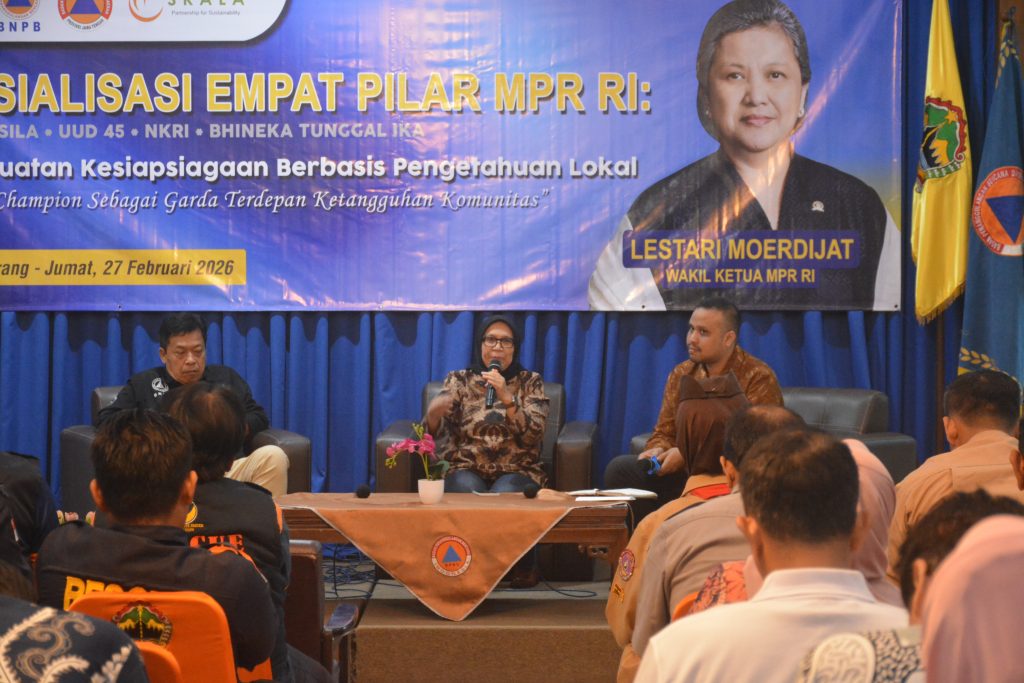
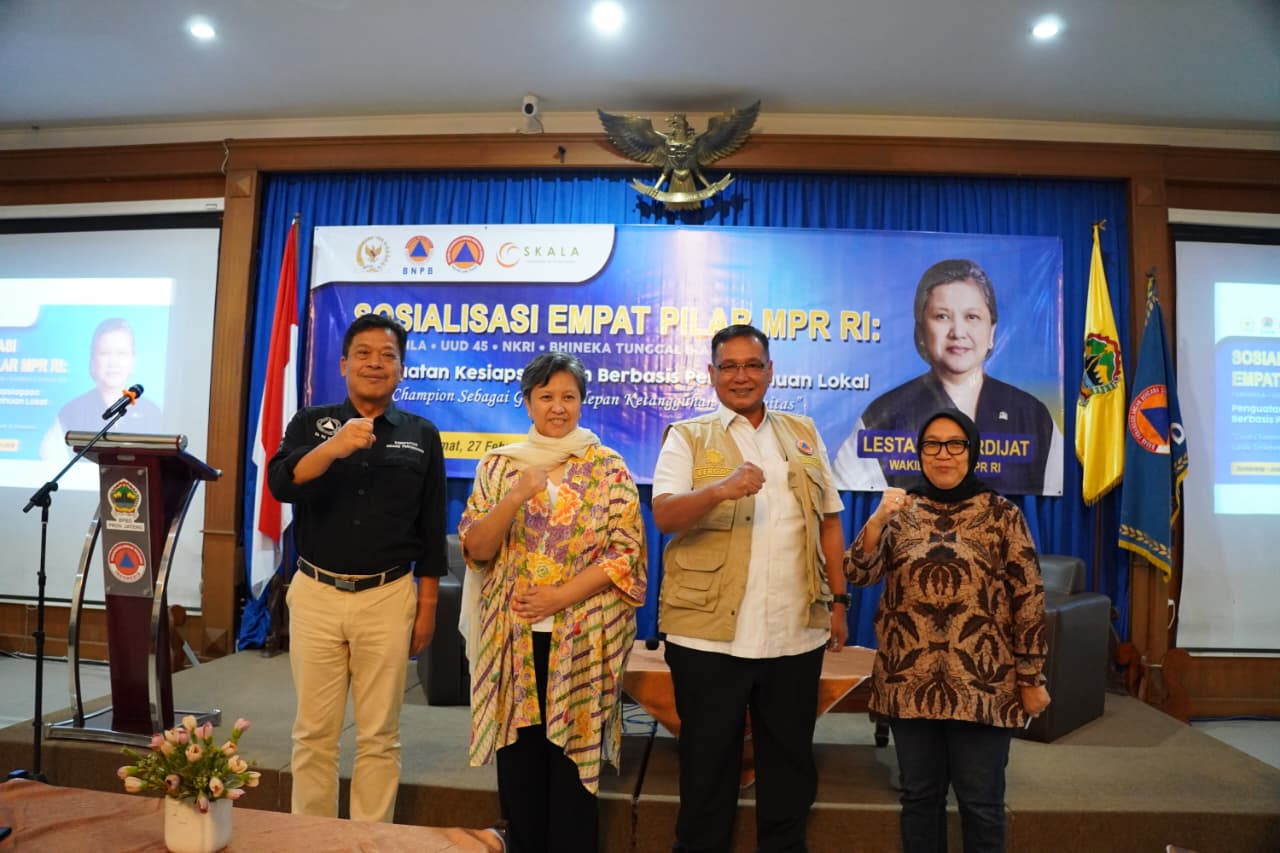
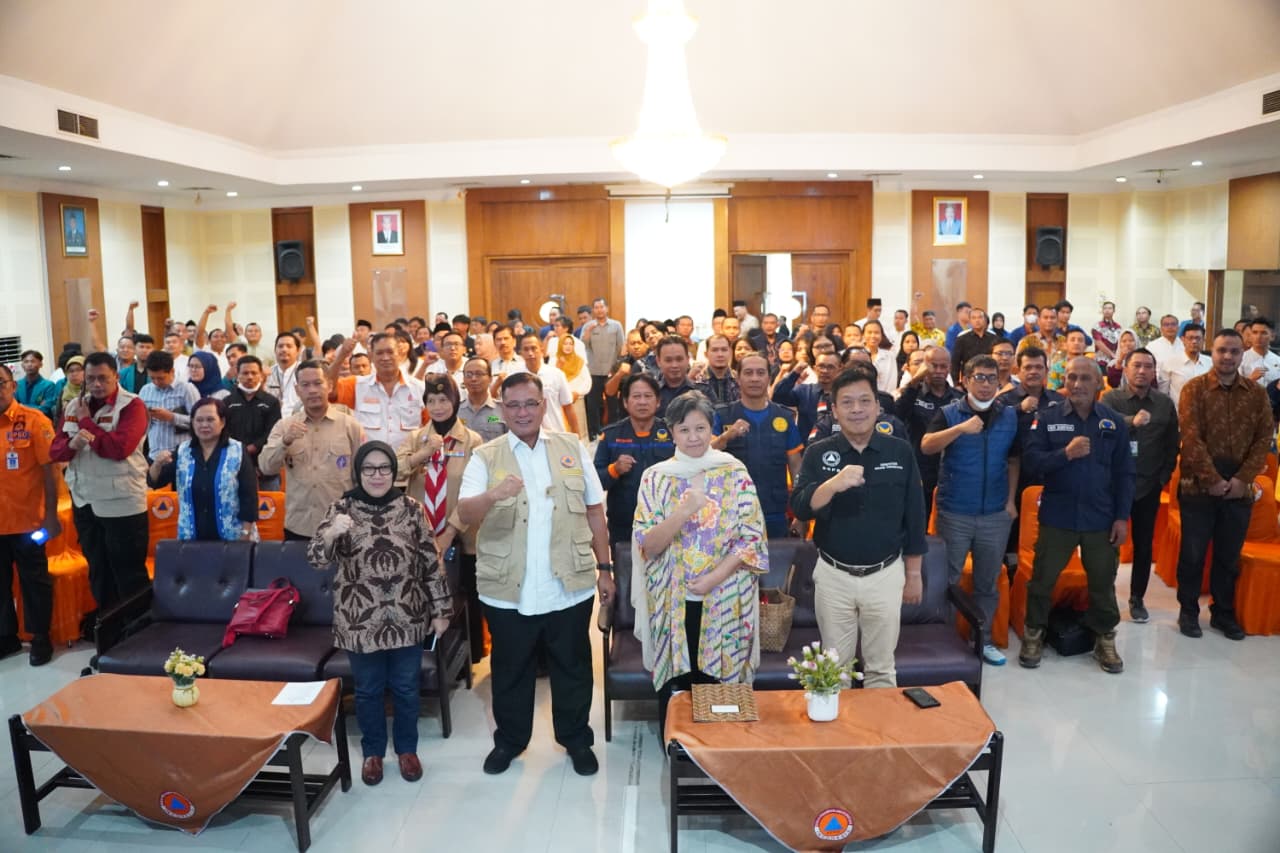
The message came to the fore National Dialogue, Socialization of the Four Pillars of the MPR RI: Strengthening Local Knowledge-Based Preparedness which was held by Scale Indonesia together with the Indonesian MPR and BNPB, collaborating with BPBD Central Java Province, Friday (27/2/2026), at the Central Java Province BPBD Office, Semarang City.
Bringing up a theme “Local Champions as the Front Guard of Community Resilience”, This activity brings together the government, volunteers, community, and disaster activists to discuss how local knowledge can be strengthened as part of disaster preparedness strategies.
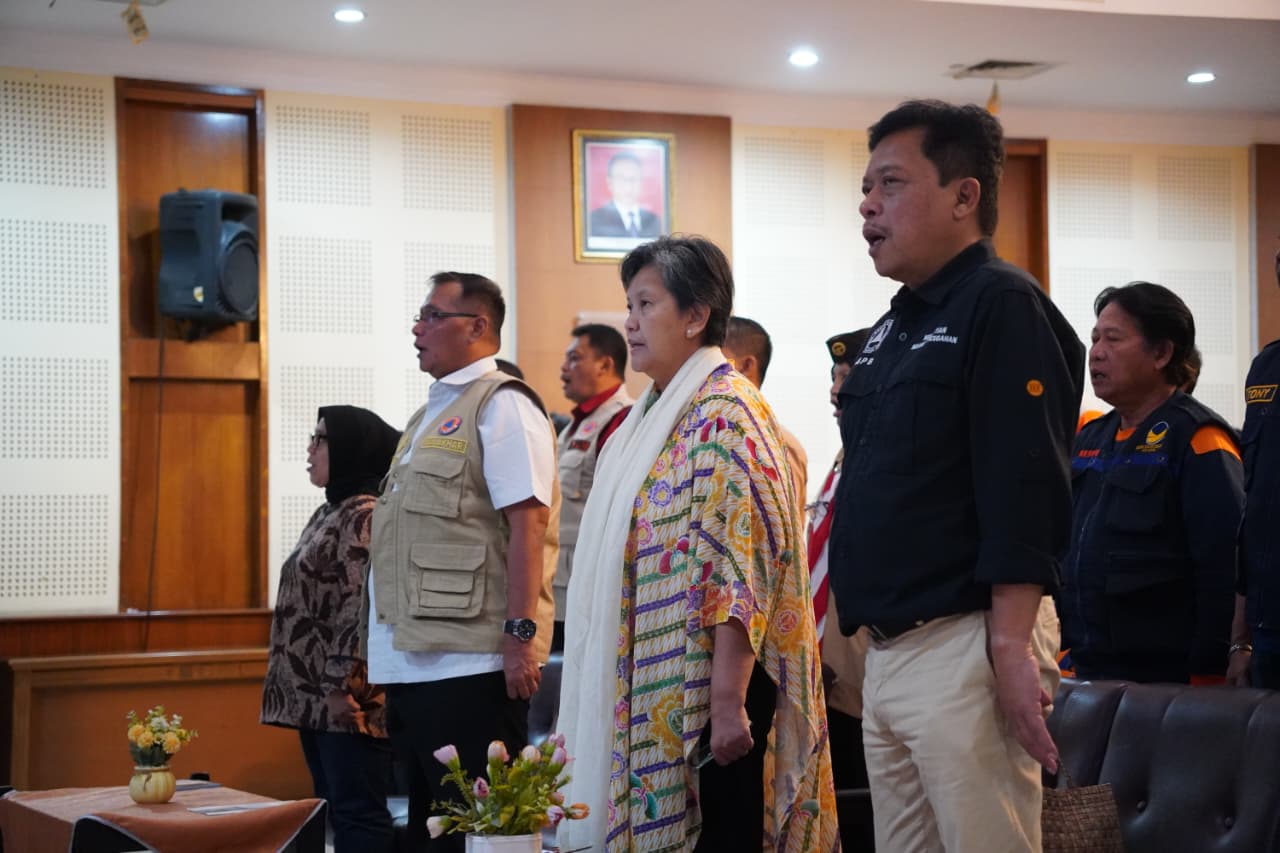
This activity presents Lestari Moerdijat, Deputy Chairman of the MPR RI, as the keynote speaker. Discussion is also present Pangarso Suryotomo, Plt. BNPB Deputy for Preparedness, and Trinimalaningrum, Director of Scale Indonesia, as a resource person. Discussion moderated by Abdurahman Heriza, Head of the Indonesian Scale Research Division.
Disaster Threats Are Increasingly Complex
Indonesia faces the threat of recurring and increasingly complex disasters. Throughout 2025 happens more than 2.942 disaster events in various provinces, with approx 70 percent of them are hydrometeorological disasters such as floods, landslide, and tropical storms.
These conditions show that reducing disaster risk requires community involvement before the disaster occurs. Preparedness needs to be built starting from the family level, community, to the local government environment.
Central Java, with the character of the region and the diversity of its people, also requires a preparedness approach that does not only rely on formal systems, but is able to integrate community experience and knowledge in facing disaster threats.
Local Wisdom Becomes Capital for Resilience
In the midst of these various threats, Indonesian people have a wealth of local knowledge that has developed from experience in dealing with the environment and disasters.
This knowledge can take the form of traditional warning systems, patterns of adaptation to the environment, as well as the practice of mutual cooperation when facing emergency situations. However, This local knowledge has not been fully documented and integrated optimally with modern preparedness systems.
Because of that, This national dialogue encourages local wisdom not only to be viewed as cultural heritage, but also as a source of strategy in building community preparedness.
Local Champion Becomes a Connector
One of the important actors that is of concern in this activity is local champion. They can come from community figures, village cadres, volunteers, as well as community activists who have direct contact with the community.
Local champions have a strategic role as a link between local knowledge and a more systematic disaster approach. They can help identify risks in their area, convey information, build risk communication, while mobilizing the community to take preparedness measures.
Strengthening the capacity of local champions is expected to encourage the birth of more community mobilizers who are able to build a culture of preparedness from the level closest to the residents..
Mutual Cooperation as a Social Force
Strengthening community-based preparedness is also closely related to the national values contained in Four Pillars of the Indonesian MPR, namely Pancasila, Constitution of the Republic of Indonesia Year 1945, The Unitary State of the Republic of Indonesia, and Bhinneka Single Ika.
The value of mutual cooperation, solidarity, association, and collective participation becomes important social capital when society faces the threat of disaster.
In this context, preparedness is not merely a technical issue. It is also part of efforts to strengthen social relations and the ability of communities to help each other when facing crisis situations.
Building Resilience Through Collaboration
The National Dialogue also emphasized the importance of cross-sector collaboration. Government, business world, College, community organization, community, and the media have complementary roles in building community resilience.
Through this collaboration, local knowledge can be identified and documented, then developed into part of a more structured preparedness plan.
This activity is directed to produce a number of outputs, among others local knowledge map related to disaster preparedness, community-based preparedness action plan, increasing the capacity of local champions, as well as documentation of good practices.
Further, This approach is expected to be able to form a more resilient community, increasing the role of local champions as agents of change, integrating local knowledge into preparedness strategies, and strengthening social solidarity based on national values.
From Citizens for Collective Resilience
Eventually, building resilience cannot be done by one institution alone. Resilience is born when people have knowledge, capacity, network, and space to take a role in dealing with risks in the region.
Through reinforcement local champion, It is hoped that local knowledge and the value of mutual cooperation can be a force that strengthens the preparedness of the people of Central Java.
Reason, A resilient society is not just a society that is able to survive when disaster strikes, but a society that is able to recognize the risk, preparing myself, strengthen each other, and rise together.